Backyard Splash Pad Installation in Phoenix
A backyard splash pad gives your kids a place to cool off every afternoon without a deep end to worry about. We design each pad around your yard, your family and your budget, then build it with Rain Deck equipment, from the ground jets to the filtration.
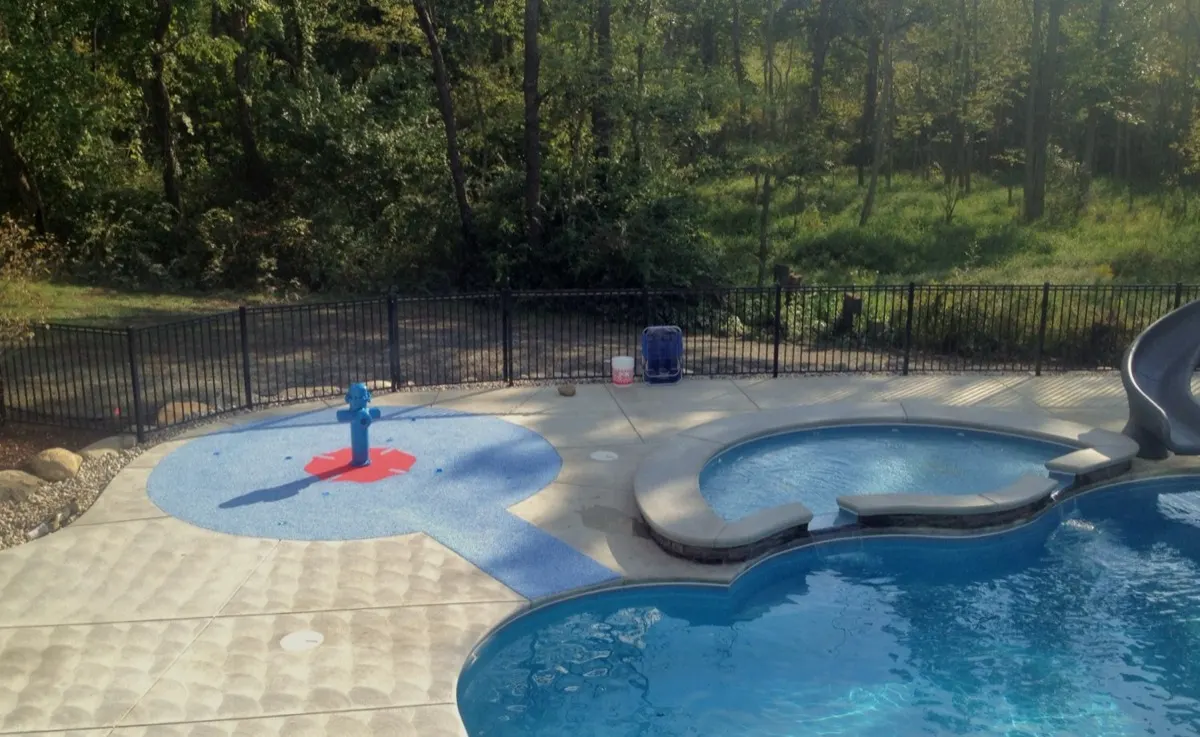
What you get
What goes into a backyard splash pad
Every residential splash pad we build has the same core parts:
- The pad: a concrete slab, usually 10×10 to 25×25 feet, sloped so water runs to a drain.
- In-ground jets: typically 6 to 16 nozzles set flush with the surface, so there is nothing to trip on when the water is off.
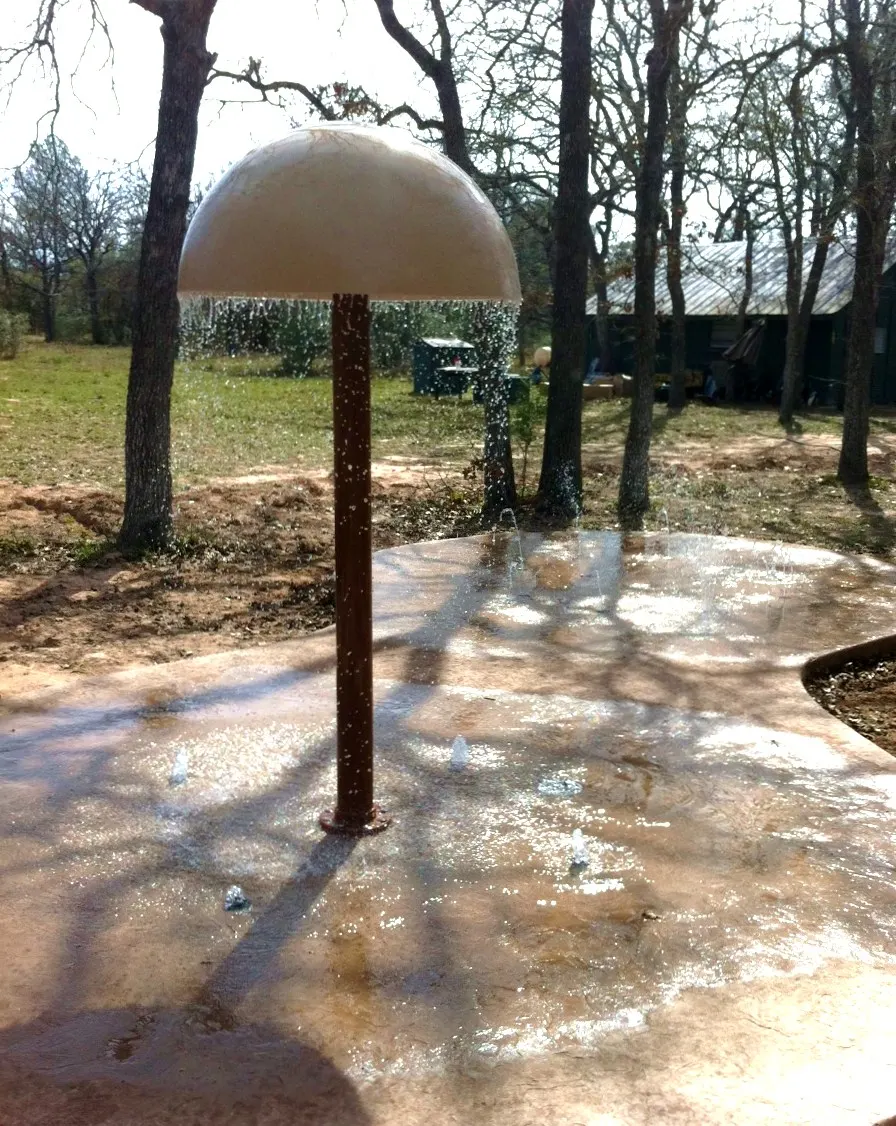
- Above-ground features (optional): water mushrooms, dumping buckets, water loops, a fire hydrant sprayer and more. See features.
- Activation: a timer button, a ground sensor, or a post kids press to start the water.
- The water system: a manifold and controller that sequence the jets, plus a tank, pump, filter and chlorinator for recirculating systems.
Systems
Recirculating, pool tie-in, or fresh water
The water system is the biggest decision, because it drives cost, water use and upkeep. We will recommend one after seeing your yard, but here is how they compare:
Recirculating (stand-alone)
An underground holding tank collects the water as it drains. A pump sends it through a cartridge filter and an in-line chlorinator, then back to the nozzles. This is the standard choice for homes without a pool.
Pool tie-in
The pad drains back into your pool, and your pool pump and filter do the work. Less equipment means a lower price, and the water is treated along with the pool.
Fresh water (flow-through)
City water sprays once and goes to the drain. It is the simplest system, but in Arizona the water use adds up, so we only recommend it in specific situations.
Built for the desert
Designing a splash pad for Arizona backyards
Heat and surfaces
Bare concrete in July sun can get too hot for bare feet. We plan for that with a cooler surface, shade where the afternoon sun hits, and a quick run of the water before play.
Hard water
Valley water is high in calcium. Good filtration, balanced chemistry and the right nozzles keep scale from building up and weakening the spray.
Monsoon dust and debris
Storms blow dirt and leaves onto the pad. A properly sized drain basket and filter make cleanup a few minutes instead of a service call.
HOAs
Many East Valley and North Phoenix neighborhoods need architectural approval first. We provide a site plan and equipment details for your HOA submittal.
Surfaces
Surface options
| Broom-finish concrete | Durable, included in base pricing, and textured for grip. Gets hot in full sun. |
|---|---|
| Cool-deck coating | A textured coating that stays noticeably cooler underfoot. Our usual recommendation for Arizona. |
| Stamped concrete | Patterned and colored to match your patio or pavers. |
| Poured rubber (EPDM) | Softer for little ones and available in bright colors. Costs the most. |
Pricing
How much does a backyard splash pad cost?
Most residential projects land between about $12,000 and $42,000 before add-ons, depending on size and system. A small pool tie-in pad sits at the low end; a large recirculating pad with several features sits at the high end. See the full breakdown on our splash pad cost guide, or build a budget estimate online.
Curious what would fit your yard?
Text us a couple of photos of your backyard and we'll tell you what's realistic before you commit to anything.
Common questions
How much yard space do I need?
A 10×10 foot pad is enough for toddlers and a few ground jets. Most families choose something around 20×20, which leaves room for several kids and one or two above-ground features. You also need a spot for the equipment, either an underground vault or a small equipment pad screened by a wall, and a path for the drain and supply lines.
Can a splash pad go next to my existing pool?
Yes, and it is a popular setup. With a pool tie-in system the pad drains back into the pool and uses your pool pump and filter, which keeps the cost down. We check that your pool equipment has enough capacity, and add a dedicated pump if it does not.
Recirculating, pool tie-in, or fresh water: which system should I get?
If you have a pool and want to keep it, a pool tie-in is usually the best value. If you do not have a pool, a recirculating (stand-alone) system with its own tank, pump, filter and chlorinator is the standard choice. Fresh-water systems are cheapest to install but send water to the drain, so we only suggest them in specific cases.
Are splash pads safer than pools for young kids?
A splash pad has no standing water: the water sprays, lands on the pad and runs straight into a drain. That removes the main drowning hazard of a pool. The CDC reports that drowning is the leading cause of death for children ages 1–4, most often in home swimming pools. Kids still need supervision around any water and on wet surfaces, but you are not watching for someone slipping under.
Does a splash pad work in Arizona heat?
Yes. Phoenix-area families use them from spring through fall. The bigger issue is the surface: plain concrete gets hot in direct sun. We usually recommend a cool-deck coating or poured rubber surfacing, plus shade if the pad gets full afternoon sun. Running the water for a minute before kids step on also cools the surface quickly.
Do I need a permit for a residential splash pad?
It depends on your city and the scope. The splash pad itself often does not need its own permit, but a new electrical circuit, a pool removal, or a large equipment wall usually does. If you live in an HOA community, you will almost always need architectural approval first. We check your city's requirements during the consultation and give you a site plan and equipment details you can submit to your HOA.
Free quote
Tell us about your project
Send a few details and we'll set up a free consultation at your property or by video call. You'll get a design layout and an itemized quote, with no obligation.
Rather call or text?
Call or text, with photos of your yard if you like
Mon–Fri 8am–6pm
Sat 9am–2pm
What happens next
- 1
We reach out. Within one business day, by phone or text, to ask a few questions about your yard.
- 2
Consultation. We visit your property or do a video call, at no cost.
- 3
Your quote. You get a design layout and an itemized quote. Take your time deciding.
We never sell or share your information. By submitting, you agree that we can contact you about your project.