Pool to Splash Pad Conversion in Phoenix
Lots of Phoenix-area families own a pool they barely swim in, but still pay to clean, treat and repair it every year. Some of them worry about it every time the grandkids visit. Converting it to a splash pad keeps the water play and drops the deep end.
There are two ways to do it, and we will price both for your yard.
Option 1
Remove the pool and build a splash pad
The pool is taken out or filled in, and a splash pad is built in that spot or elsewhere in the yard. You end up with a splash pad, usable yard space, and no pool to maintain.
Partial vs. full pool removal
- Partial removal: the top of the shell is broken out, the floor is cracked so water can drain, and the hole is backfilled. It costs less, but the area may be restricted for future structures and usually has to be disclosed when you sell.
- Full removal: the entire shell and plumbing come out, and the fill is compacted in layers and tested. It costs more, but the ground is fully usable afterward.
Pool removal in Valley cities typically requires a permit and an inspection. We scope the removal and the splash pad together, so you get one plan, one timeline and one point of contact.
Option 2
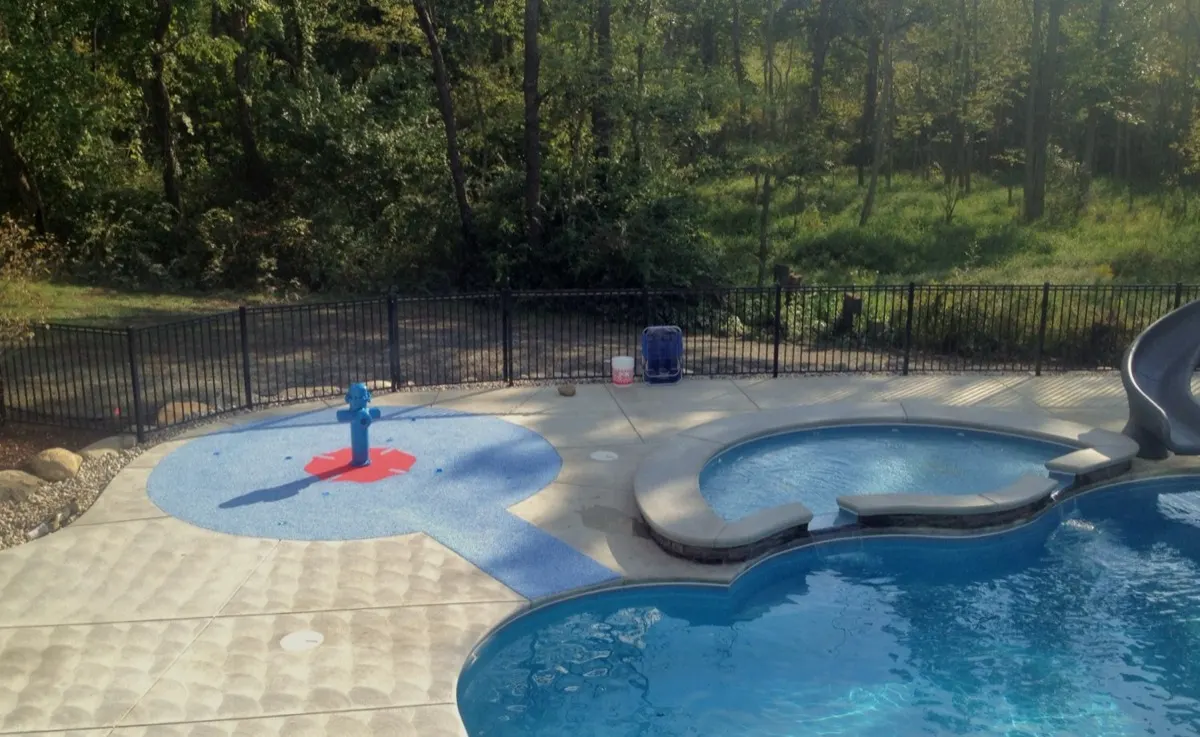
Keep the pool and add a splash pad beside it
If older kids or adults still use the pool, you can keep it and add a splash pad on the deck for the little ones. With a pool tie-in system, the pad drains back into the pool and runs on your existing pump and filter, so it is the most affordable way to add a splash pad.
We check that your pool equipment can handle the extra flow, and add a dedicated pump if it cannot. A pool barrier or safety cover still matters for the pool itself.
Is it worth it?
What changes when the pool goes away
- Lower ongoing costs. No more filling, heating and treating tens of thousands of gallons, and no resurfacing bill down the road.
- Less to worry about with little kids. No standing water means no deep end to guard.
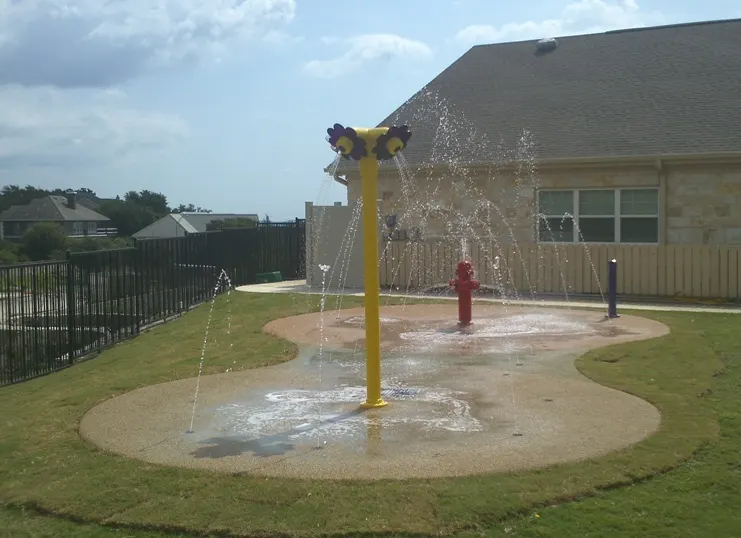
- More usable yard. A splash pad takes a fraction of the space, and the rest can become lawn, turf or patio.
- Year-round utility. When the water is off, the pad is a flat play surface.
The trade-off is real: nobody will be swimming laps. If the pool still gets regular use, Option 2 is usually the better call. We will tell you honestly which makes more sense. See typical splash pad costs.
Have a pool you're thinking about replacing?
We'll look at the pool, the yard and your equipment, and price both options side by side.
Common questions
Can you turn my pool into a splash pad?
Yes. The pool is removed or filled in first, then the splash pad is built in that space or nearby. The other option is to keep the pool and add a splash pad next to it. We will walk the yard with you and lay out both options with prices so you can compare.
What is the difference between a partial and a full pool removal?
In a partial removal, the top of the pool shell is broken out, the bottom is cracked so it drains, and the hole is backfilled. It costs less, but some cities and buyers treat the area as unsuitable for future structures. In a full removal, the entire shell comes out and the fill is compacted and tested, which costs more but leaves fully usable ground. Your city may require a permit either way.
Is it cheaper to convert a pool than to keep it?
Up front, a conversion is a real project: pool removal plus the splash pad. Long term, you stop paying for a large body of water: pool chemicals, the pump's electricity, evaporation and repairs. For families who barely use the pool, or who worry about little kids around it, the trade is often worth it. We will give you the numbers for your yard so you can decide.
Can I reuse my pool equipment?
Sometimes. If your pump, filter and plumbing are in good shape and sized appropriately, parts may carry over to a recirculating splash pad. Often the splash pad needs a smaller, dedicated system. We check during the site visit.
How long does installation take?
Most residential projects take 4–6 weeks from signed quote to first splash. Equipment ordering takes 1–2 weeks, excavation, plumbing and the concrete pour take a few days, concrete cures for about a week, and equipment install and testing takes 2–3 days. Pool conversions and projects that need HOA approval or permits take longer. You get a specific schedule with your quote.
Free quote
Tell us about your project
Send a few details and we'll set up a free consultation at your property or by video call. You'll get a design layout and an itemized quote, with no obligation.
Rather call or text?
Call or text, with photos of your yard if you like
Mon–Fri 8am–6pm
Sat 9am–2pm
What happens next
- 1
We reach out. Within one business day, by phone or text, to ask a few questions about your yard.
- 2
Consultation. We visit your property or do a video call, at no cost.
- 3
Your quote. You get a design layout and an itemized quote. Take your time deciding.
We never sell or share your information. By submitting, you agree that we can contact you about your project.